
    Blog

    Indsigter om privatliv, dagbogsskrivning og mental sundhed.
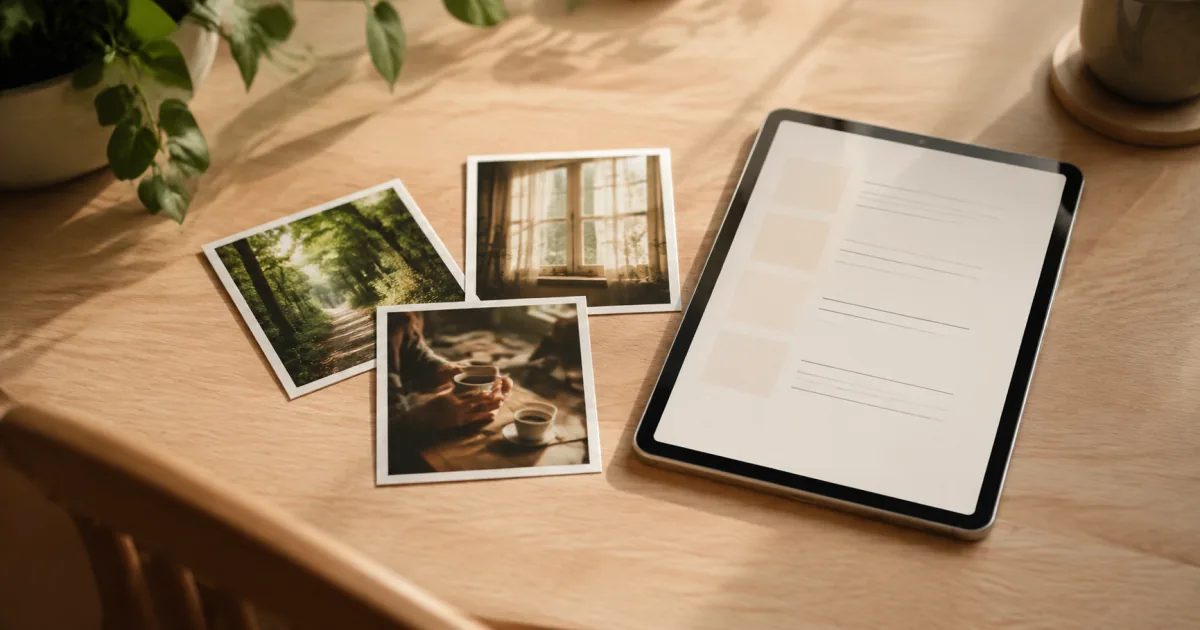
    An unbranded tablet and several small photographs on a sunlit desk, arranged for looking back over a week.
    10 min læsning

    Spørgsmål til selvrefleksion om ugen, der er gået

    Tolv spørgsmål til selvrefleksion med eksempel og skema. Se tilbage på ugens oplevelser, og undersøg dine fortolkninger uden at fælde dom over dig selv.

    Læs mere
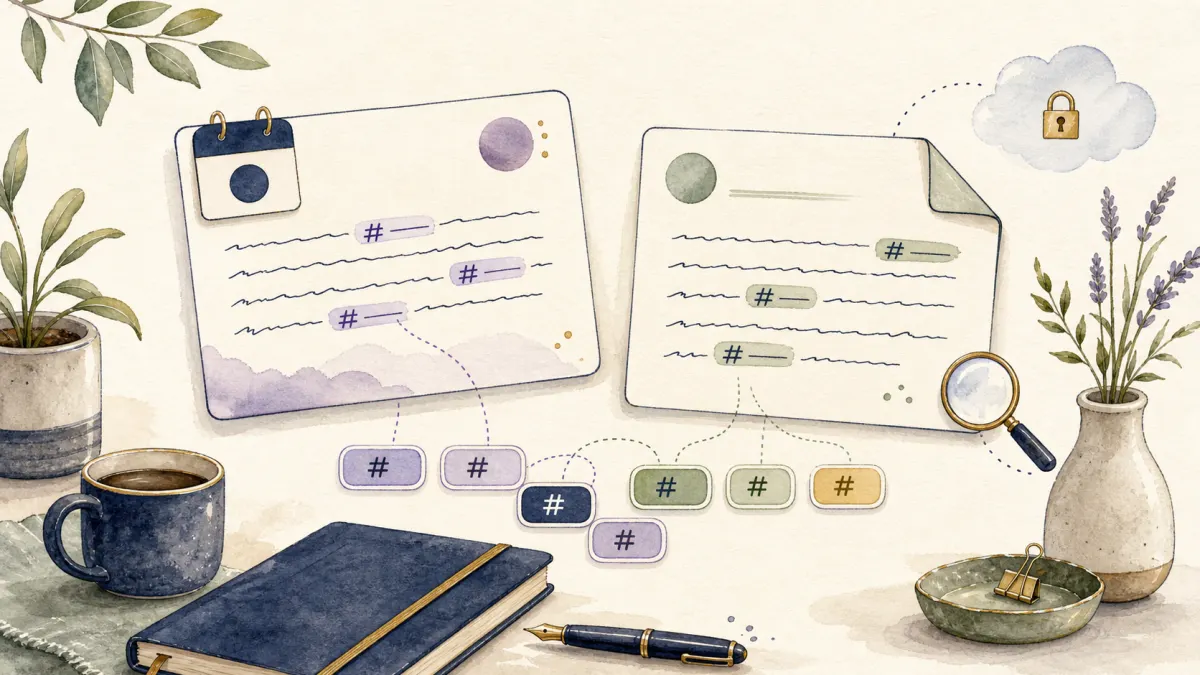
    OwnJournal Notes update shown as a calm writing workspace with a journal entry, a separate note, and connected inline hashtag labels.
    3 min læsning

    OwnJournal 1.0.26 på nettet: noter og #tags i teksten

    Webappen får noter og #tags direkte i teksten i version 1.0.26. Mobilappsene understøtter endnu ikke opdateringen.

    Læs mere

    OwnJournal app logo with text 'OwnJournal is now on the App Store' and the official 'Download on the App Store' badge, announcing the app's launch for iPhone and iPad.
    1 min læsning

    OwnJournal er nu på App Store

    Du kan nu installere OwnJournal fra App Store. Skriv i din private dagbog, gemt i din egen sky, på både iPhone og iPad.

    Læs mere
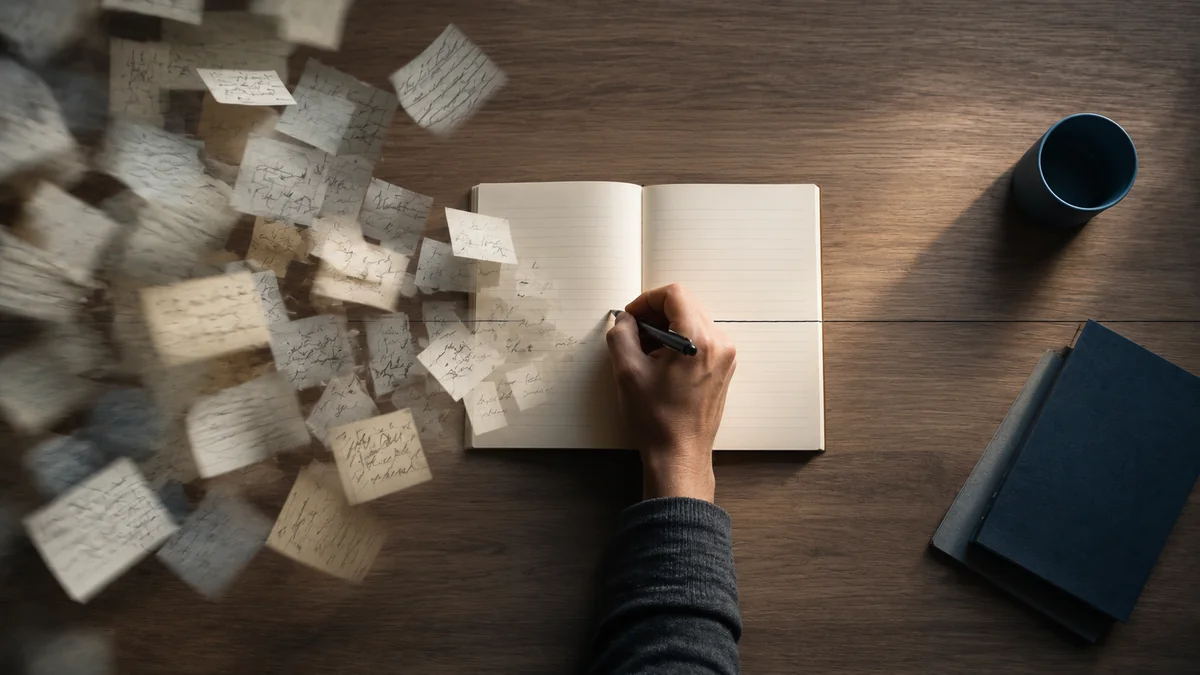
    Does journaling improve focus and concentration? An overhead photograph of a warm wooden desk in soft light. On the left, a cloud of overlapping handwritten sticky notes drifts out of focus — the scattered, competing thoughts of a distracted mind. In the centre, a hand writes calmly in an open, blank notebook, drawing order out of the clutter. A mug and a neat stack of closed books rest quietly on the right. The image suggests that writing does not add concentration so much as clear away the noise competing with it.
    7 min læsning

    Giver det at skrive dagbog bedre koncentration? Det siger forskningen

    Ingen af studierne her undersøger dagbogsskrivning og hverdagsfokus direkte. Forskning i eksamensbekymring, arbejdshukommelse og konkrete planer giver mere afgrænsede fingerpeg.

    Læs mere
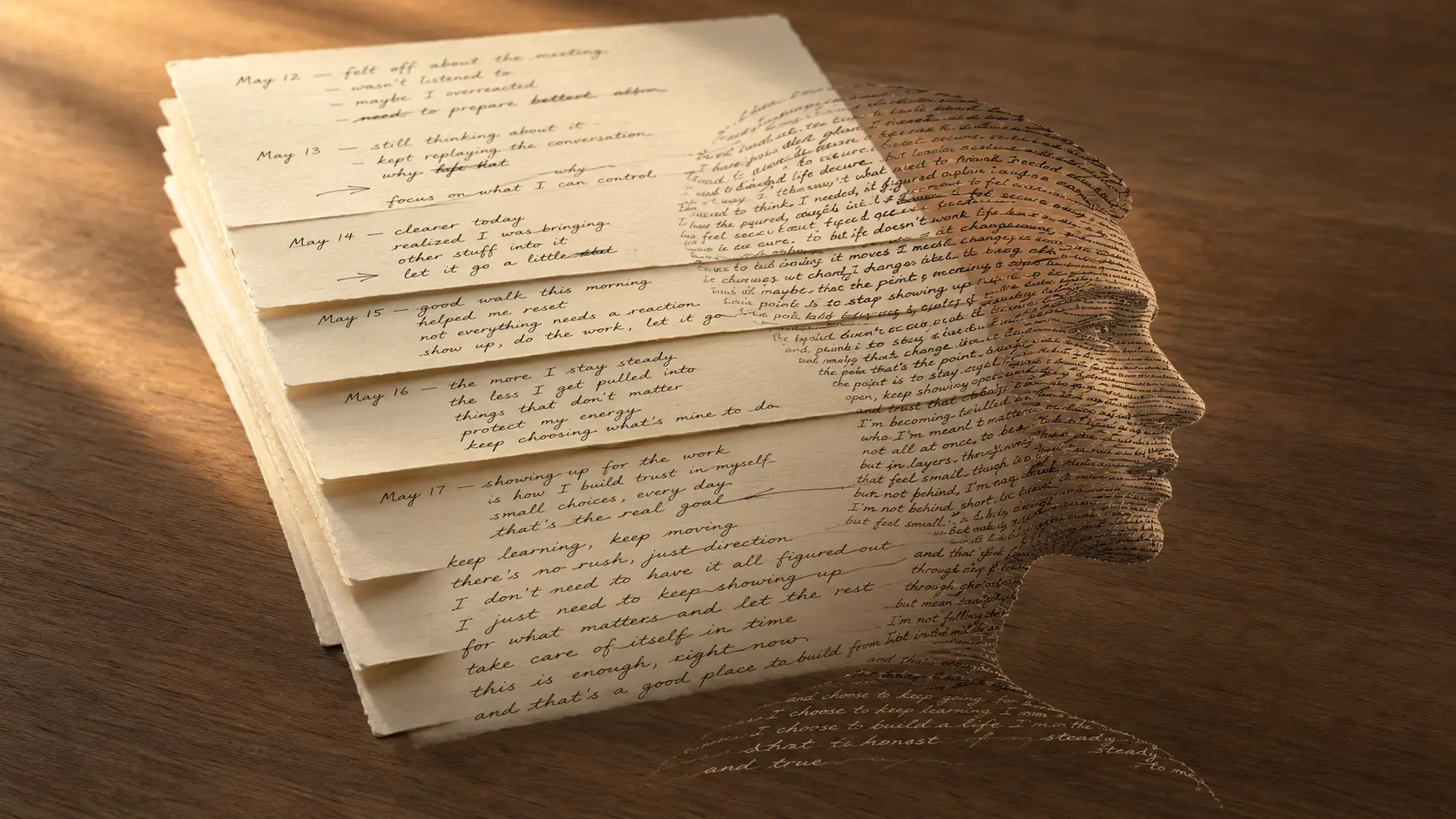
    How journaling shapes your identity: an overhead photograph of a quiet walnut desk in warm amber morning light. A stack of six fanned cream journal pages lies in the centre, each page handwritten in the same calm dark ink and dated in sequence — May 12 through May 17 — with bullet-style entries on each ("felt off about the meeting", "still thinking about it", "clearer today", "good walk this morning", "the more I stay steady, the less I get pulled into things that don't matter", "showing up for the work is how I build trust in myself"). Crossed-out words and small arrows crowd the margins of the earlier pages; the entries lengthen and steady as the dates progress. To the right of the stack, the same handwriting continues off the edge of the pages onto the wood of the desk and composes, in mid-air just above the surface, the soft profile of a human face turned to the right. The face is not drawn — it is made entirely of writing: small dated sentences forming the cheekbone, longer reflective passages forming the jaw and neck, a single bold paragraph along the line of the forehead. The silhouette is half-transparent so the desk grain is faintly visible through it. The picture says that the self is not chosen in one decision; it is composed, slowly, out of the entries you have already written about yourself.
    8 min læsning

    Hvordan en dagbog kan påvirke din identitet: hvad forskningen viser

    Narrativ identitet beskriver, hvordan vi opbygger vores livsfortælling. En dagbog kan gøre processen synlig, men den direkte evidens er begrænset.

    Læs mere
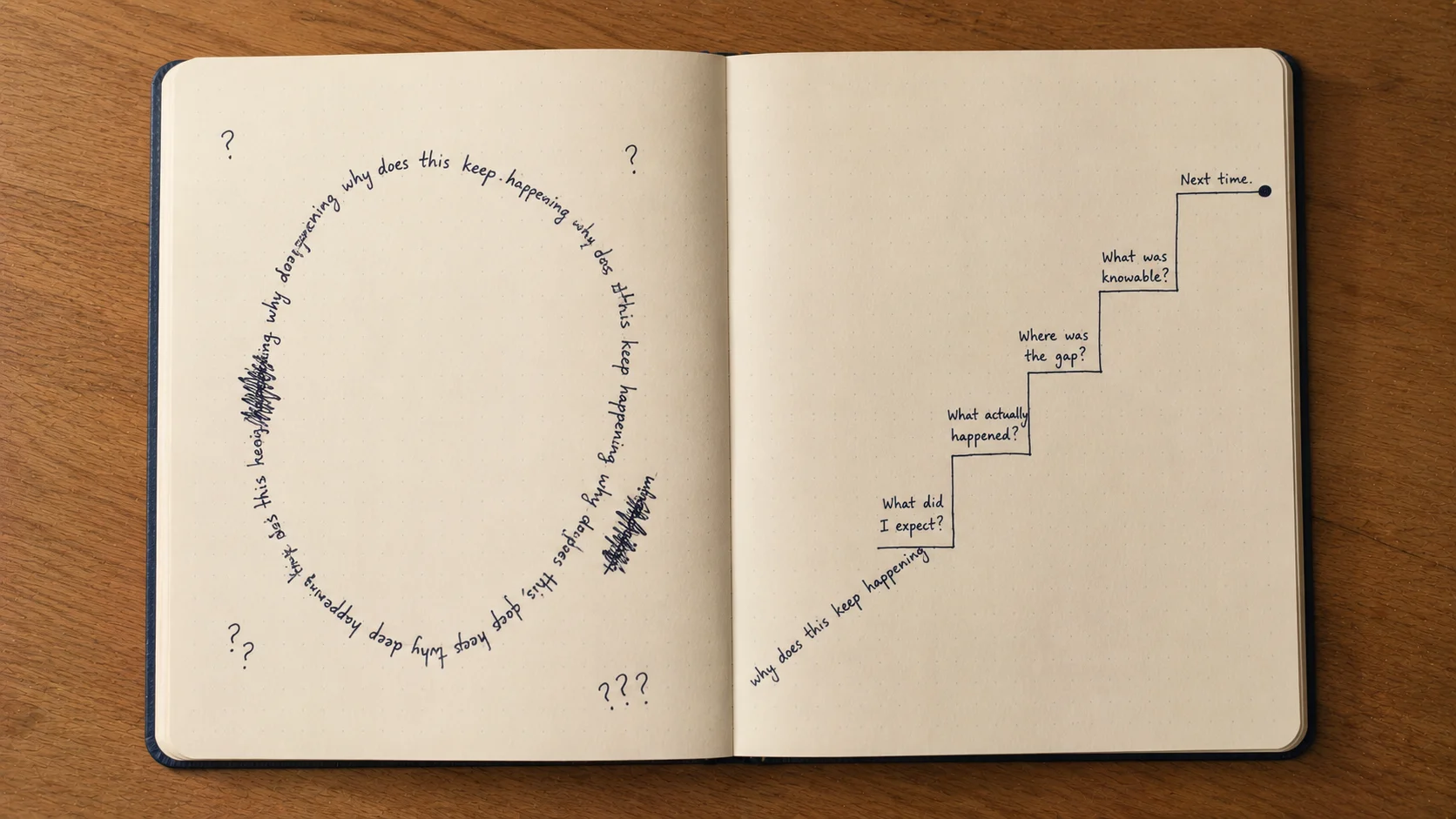
    Does journaling help you learn from mistakes: an open notebook on a plain wooden surface, photographed from above. The left page shows a tight, dense closed loop of dark ink, the phrase 'why does this keep happening' written along its path eight or nine times so the words become the line; question marks and scribbled-out words crowd the margins, the pen pressure visibly heavier. The right page begins with the same phrase but the line breaks out of the loop and rises diagonally into a clean upward staircase of five short steps, each labelled in the same hand, smaller and calmer: 'What did I expect? — What actually happened? — Where was the gap? — What was knowable? — Next time.' The final step ends in a single small dot, settled rather than pushing. Same hand, same notebook, same problem — the difference between rumination as a closed loop and reflection as a staircase out of it.
    7 min læsning

    Hjælper en dagbog med at lære af fejl?

    Struktureret refleksion kan støtte læring, men studier af debriefing og ekspressiv skrivning viser ikke, at en privat dagbog forhindrer gentagne fejl.

    Læs mere
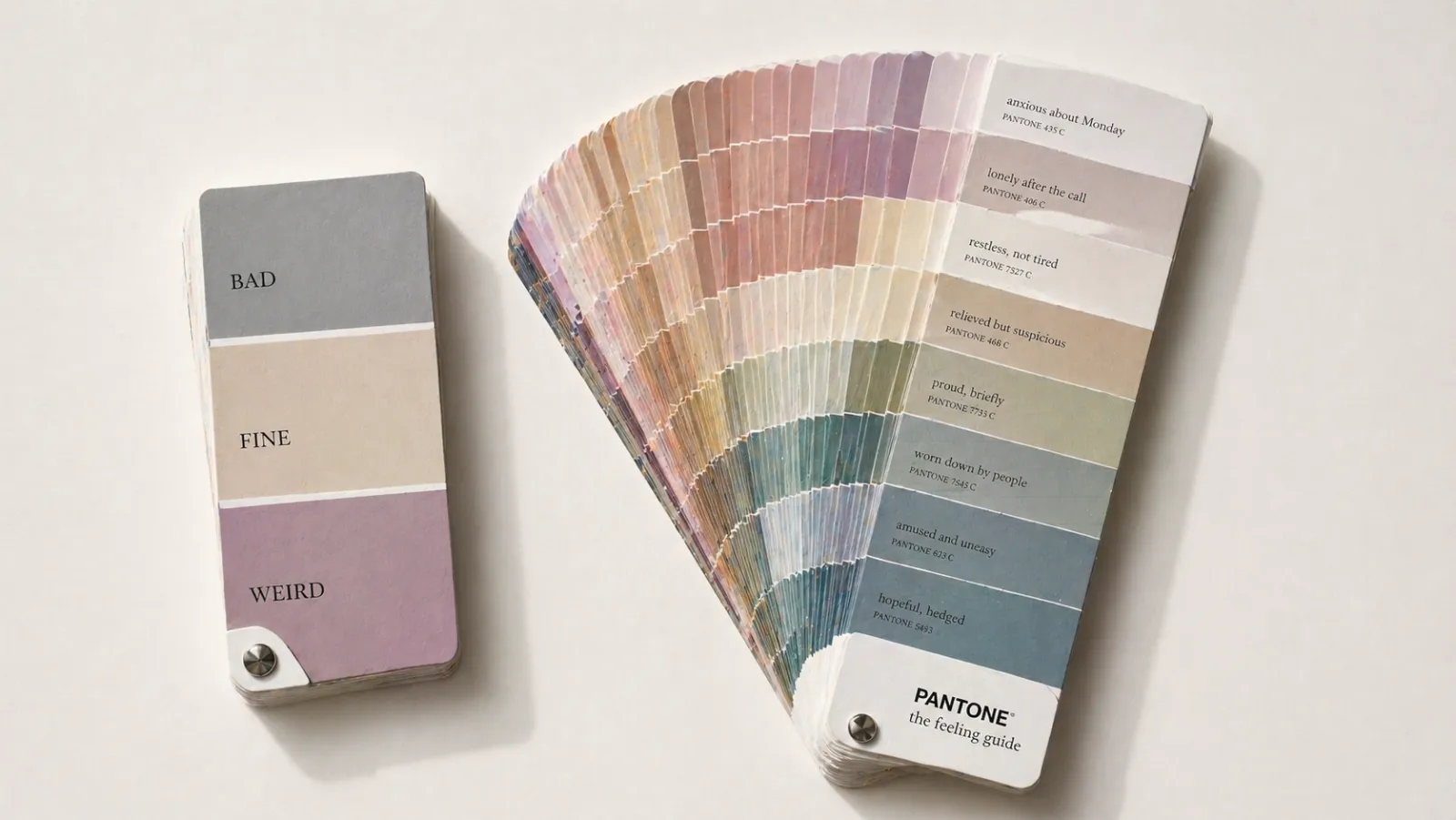
    Does journaling improve emotional intelligence: two Pantone-style swatch fans on a cream background, photographed from above. The smaller closed fan on the left shows three flat blocks of color stacked vertically, each labelled in plain capitals — 'BAD' over a slate gray, 'FINE' over a beige, 'WEIRD' over a dusty mauve — the way most days arrive in the head before any work is done on them. The larger fan on the right is splayed open like a paint deck, dozens of subtly distinct hues each labelled in serif type with a specific feeling: 'anxious about Monday', 'lonely after the call', 'restless, not tired', 'relieved but suspicious', 'proud, briefly', 'worn down by people', 'amused and uneasy', 'hopeful, hedged'. The fan is titled 'PANTONE the feeling guide' on the cover swatch. The contrast between the two — same medium, radically different resolution — is the entire image.
    11 min læsning

    Styrker dagbogsskrivning din emotionelle intelligens?

    At skrive en følelse ned tvinger dig til at give den et præcist navn – og det er kernen i emotionel intelligens. Hvad forskningen viser.

    Læs mere
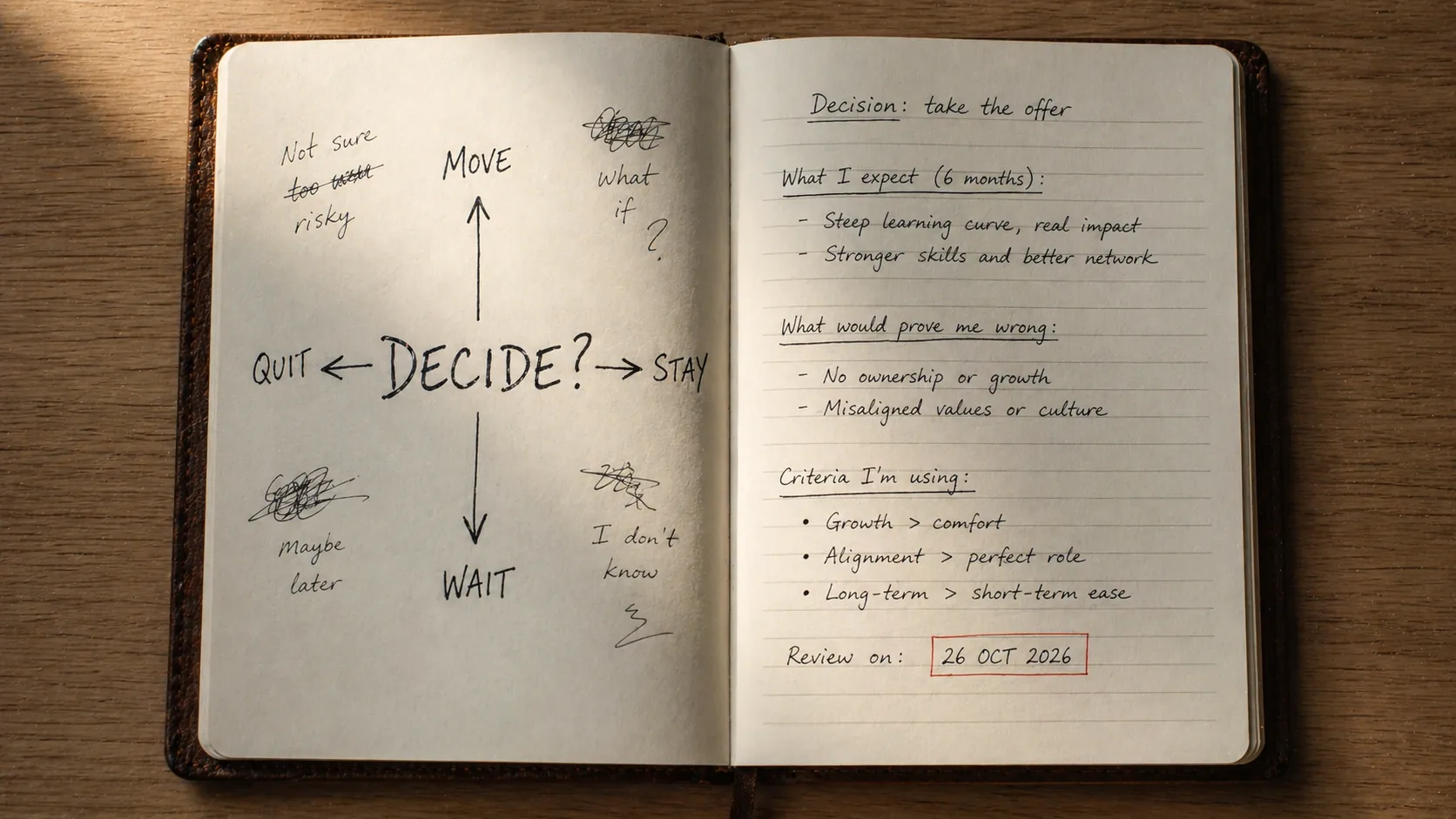
    Does journaling help you make better decisions: an open leather-bound notebook on a wooden desk. The left page is the same decision as it lives in your head — a chaotic 'DECIDE?' in the centre with arrows pointing to MOVE, STAY, QUIT, and WAIT, and scribbled hesitations in the margins ('Not sure too risky', 'What if?', 'Maybe later', 'I don't know'). The right page is the same decision once it has been written out — under the heading 'Decision: take the offer', four labelled sections cover what I expect in six months, what would prove me wrong, the criteria I'm using, and a review date of 26 OCT 2026 boxed in red. The contrast between the two pages — same hand, same problem, totally different relationship to the problem — is the entire image.
    9 min læsning

    Hjælper dagbogsskrivning dig med at træffe bedre beslutninger?

    En beslutningsdagbog registrerer kriterier og forventninger til senere gennemgang, men der mangler stadig direkte belæg for, at den forbedrer beslutningsudfald.

    Læs mere
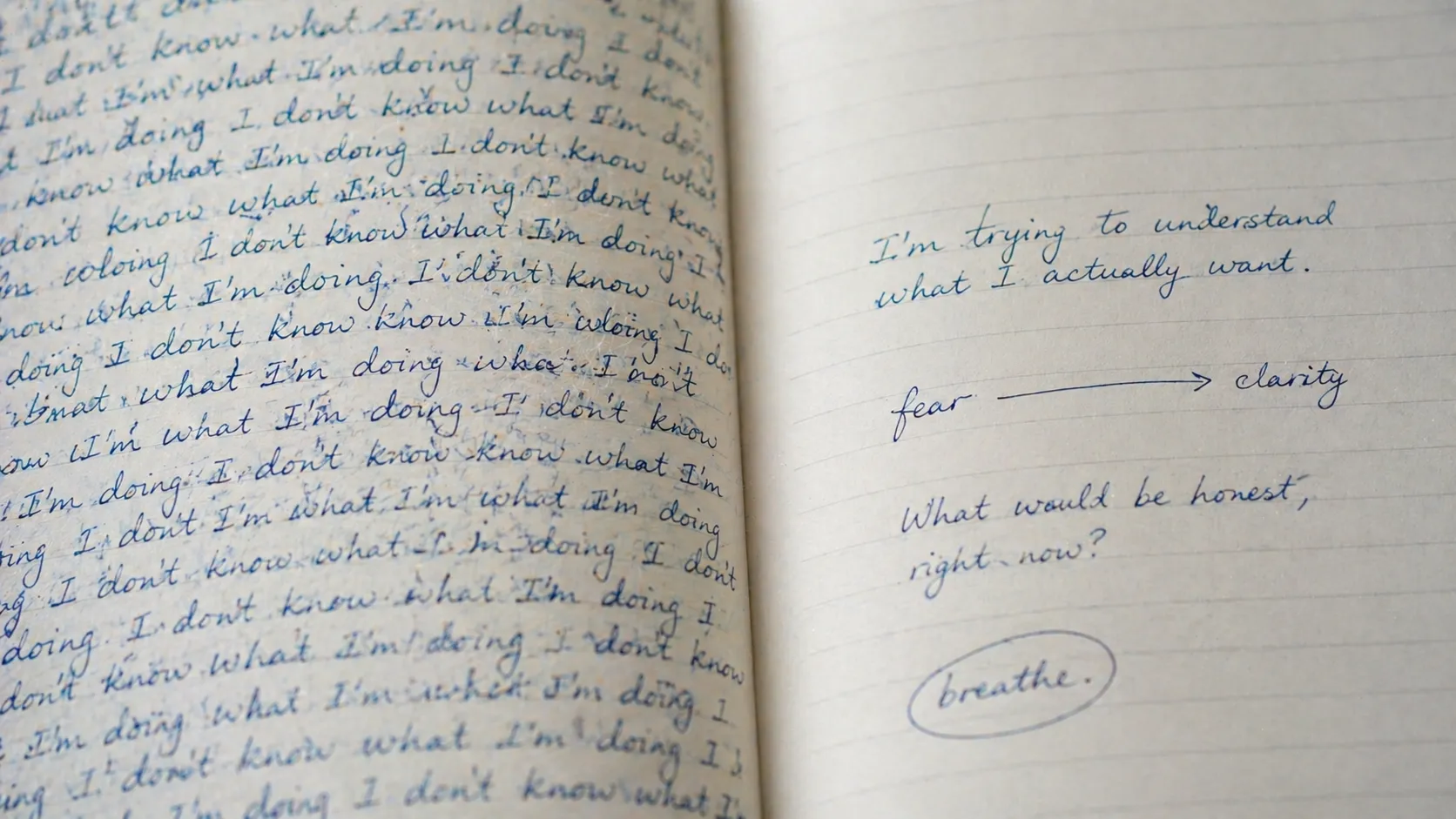
    How journaling improves self-awareness: an open notebook with the left page densely filled with the repeated phrase 'I don't know what I'm doing' — rumination on paper — while the right page contains calm, structured reflection: 'I'm trying to understand what I actually want', an arrow from fear to clarity, the question 'what would be honest, right now?', and a single circled word 'breathe'.
    9 min læsning

    Kan dagbogsskrivning forbedre selvindsigten?

    En dagbog kan bevare observationer og spørgsmål, men nærliggende forskning viser ikke, at skrivning alene skaber præcis viden om en selv.

    Læs mere
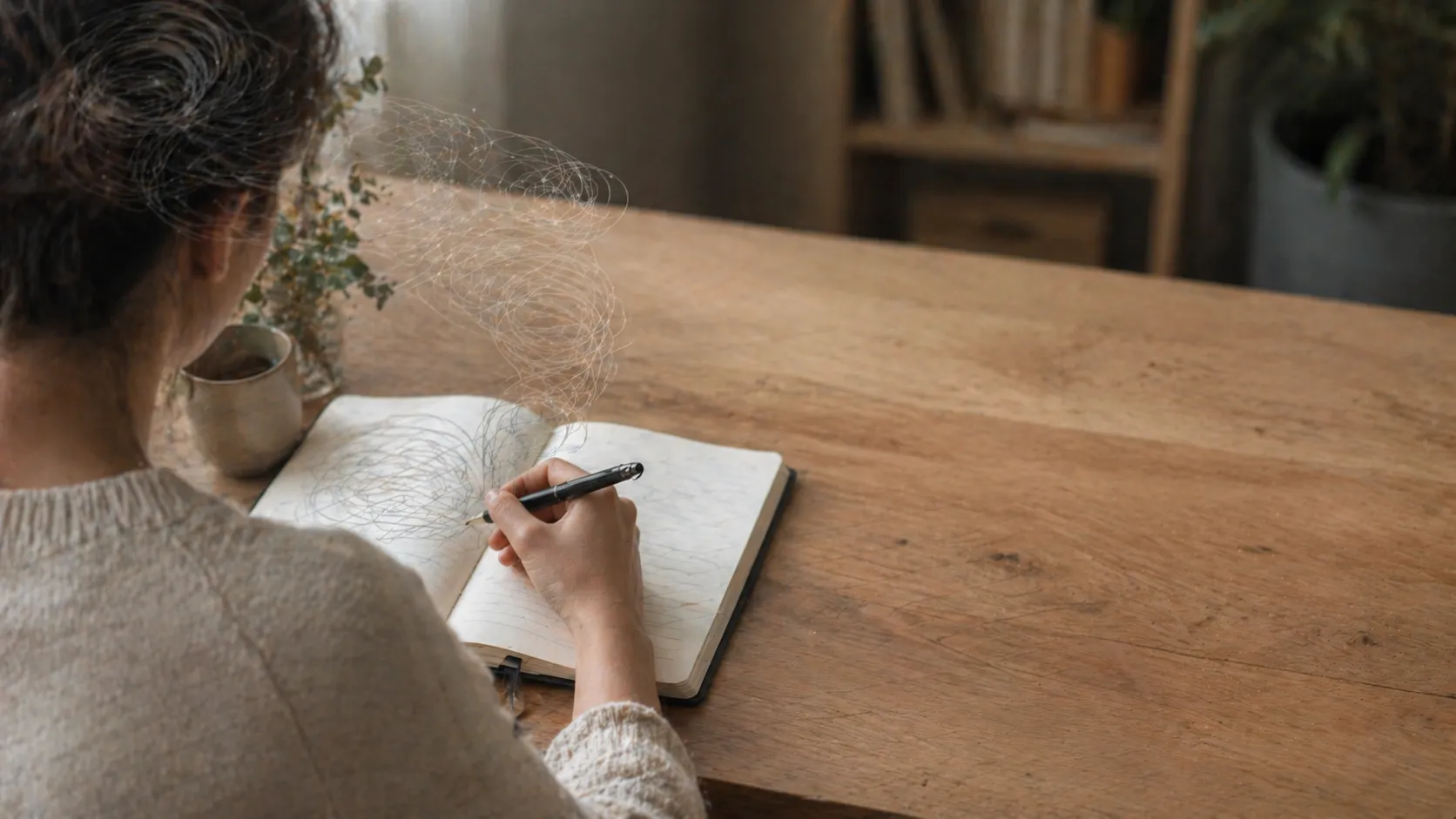
    Does journaling help with overthinking? A person writing quietly in a notebook at a calm desk — exploring the research on rumination, repetitive thought, and expressive writing.
    9 min læsning

    Hjælper dagbogsskrivning mod overtænkning? Hvad forskningen viser

    Forskning i ruminering og ekspressiv skrivning giver indirekte og blandet evidens. Struktureret skrivning kan afprøves, men er ikke en dokumenteret behandling mod overtænkning.

    Læs mere

    Can journaling improve your memory? A person writing in a journal with an open book nearby — exploring the research on journaling, working memory, and how writing encodes experience.
    10 min læsning

    Kan dagbogsskrivning forbedre hukommelsen? Hvad forskningen viser

    Skrivning kan støtte visse processer i arbejdshukommelsen og bevare en ekstern registrering; direkte belæg for bedre selvbiografisk erindring er begrænsede.

    Læs mere
    What is Positive Affect Journaling? A person writing at a desk in natural light, exploring the science of structured positive writing for anxiety and resilience.
    9 min læsning

    Positive Affect Journaling: Hvad undersøgte forskerne egentlig?

    Positive Affect Journaling blev afprøvet i et lille, nøje afgrænset forsøg blandt voksne med sygdom og let til moderat angst. Her er resultaterne – og forbeholdene.

    Læs mere
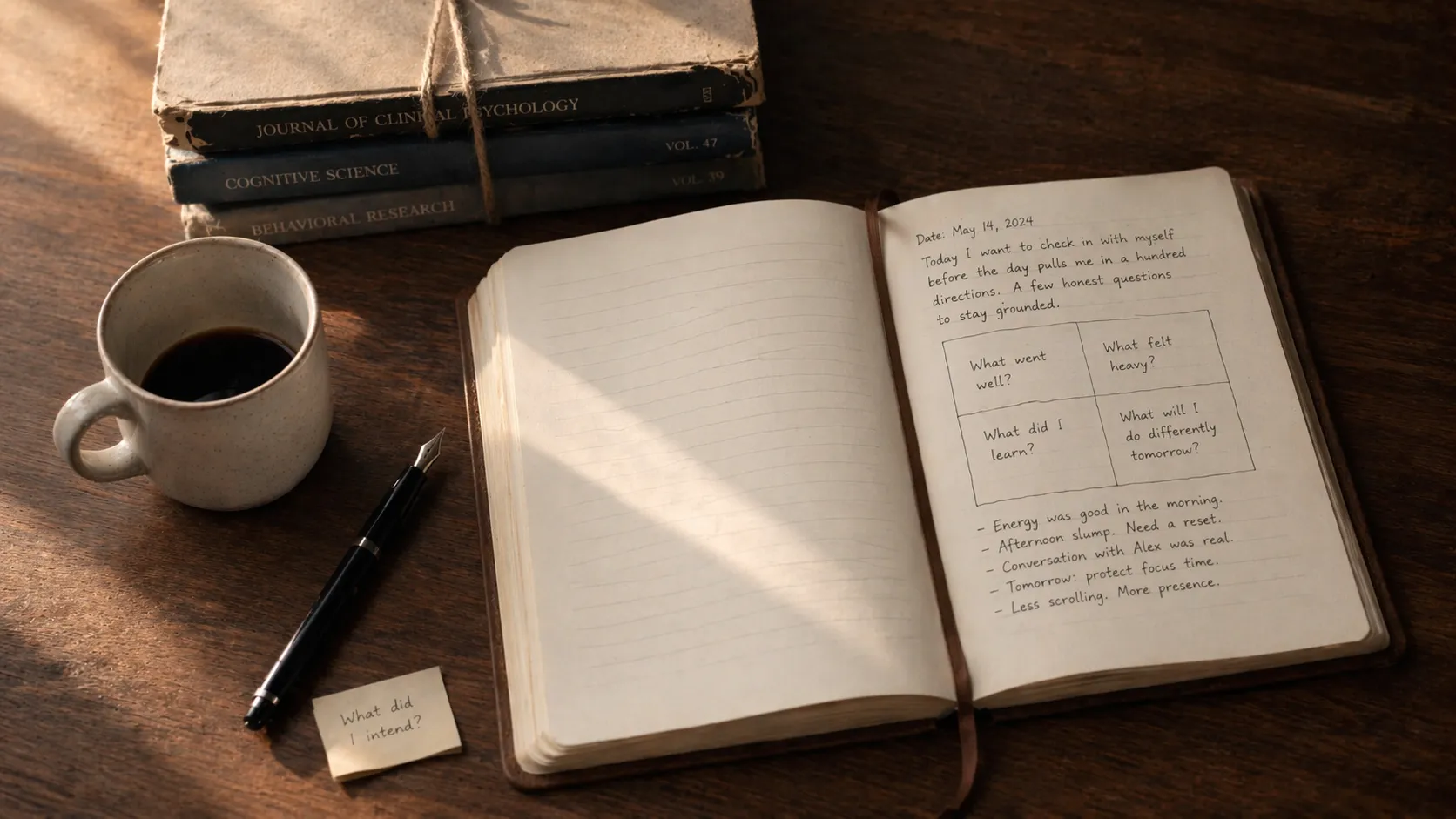
    Why high performers journal: what the research says about structured written reflection, cognitive offloading, and the after-action review.
    15 min læsning

    Hvorfor topudøvere skriver dagbog – hvad forskningen viser

    Nogle fremtrædende personer skriver, men vi ved ikke, hvor udbredt det er. Forskningen støtter bestemte refleksions- og debriefingmetoder.

    Læs mere
    Does gratitude journaling actually work? A research review of meta-analyses, effect sizes, and evidence-based approaches to gratitude writing.
    9 min læsning

    Virker taknemlighedsdagbog egentlig?

    Taknemlighedsøvelser har en lille gennemsnitlig effekt, men resultatet varierer med opgave og sammenligning. Ingen form eller hyppighed er bedst for alle.

    Læs mere
    How to journal for clarity: six research-informed writing exercises for examining problems and decisions, including pre-mortems and steelmanning.
    10 min læsning

    Sådan skriver du dagbog for klarere tænkning

    Seks skriveøvelser inspireret af beslægtet forskning til at undersøge problemer og beslutninger – hjernedump, pre-mortem og mere.

    Læs mere
    Does journaling help with stress? A research review of meta-analyses and clinical trials on expressive writing, effect sizes, and evidence-based approaches.
    12 min læsning

    Hjælper dagbogsskrivning mod stress?

    Skrivning kan hjælpe i nogle situationer, men evidensen for stress specifikt er begrænset. Effektstørrelser, mulige mekanismer og sikkerhedsgrænser.

    Læs mere
    How to journal for stress: five bounded writing exercises with direct, adjacent, and mixed evidence clearly separated.
    12 min læsning

    Dagbog ved stress: en praktisk guide

    Fem afgrænsede skriveøvelser ved stress med klare begrænsninger for timing, mekanismer, dosis og hvad de citerede studier faktisk undersøgte.

    Læs mere
    Does journaling help with depression? A research review of meta-analyses and clinical trials on expressive writing, rumination, and evidence-based approaches.
    12 min læsning

    Hjælper dagbogsskrivning mod depression?

    Et overblik over blandede depressionsfund, små protokolspecifikke studier, risikoen for grublerier og hvorfor dagbog ikke erstatter behandling.

    Læs mere

    A practical guide to five bounded writing exercises that may support reflection alongside depression care, with evidence and safety limits.
    7 min læsning

    At skrive dagbog ved depression: En praktisk guide

    Fem afgrænsede skriveøvelser, som kan overvejes ved siden af depressionsbehandling, med forskningsgrænser og sikkerhedsråd.

    Læs mere
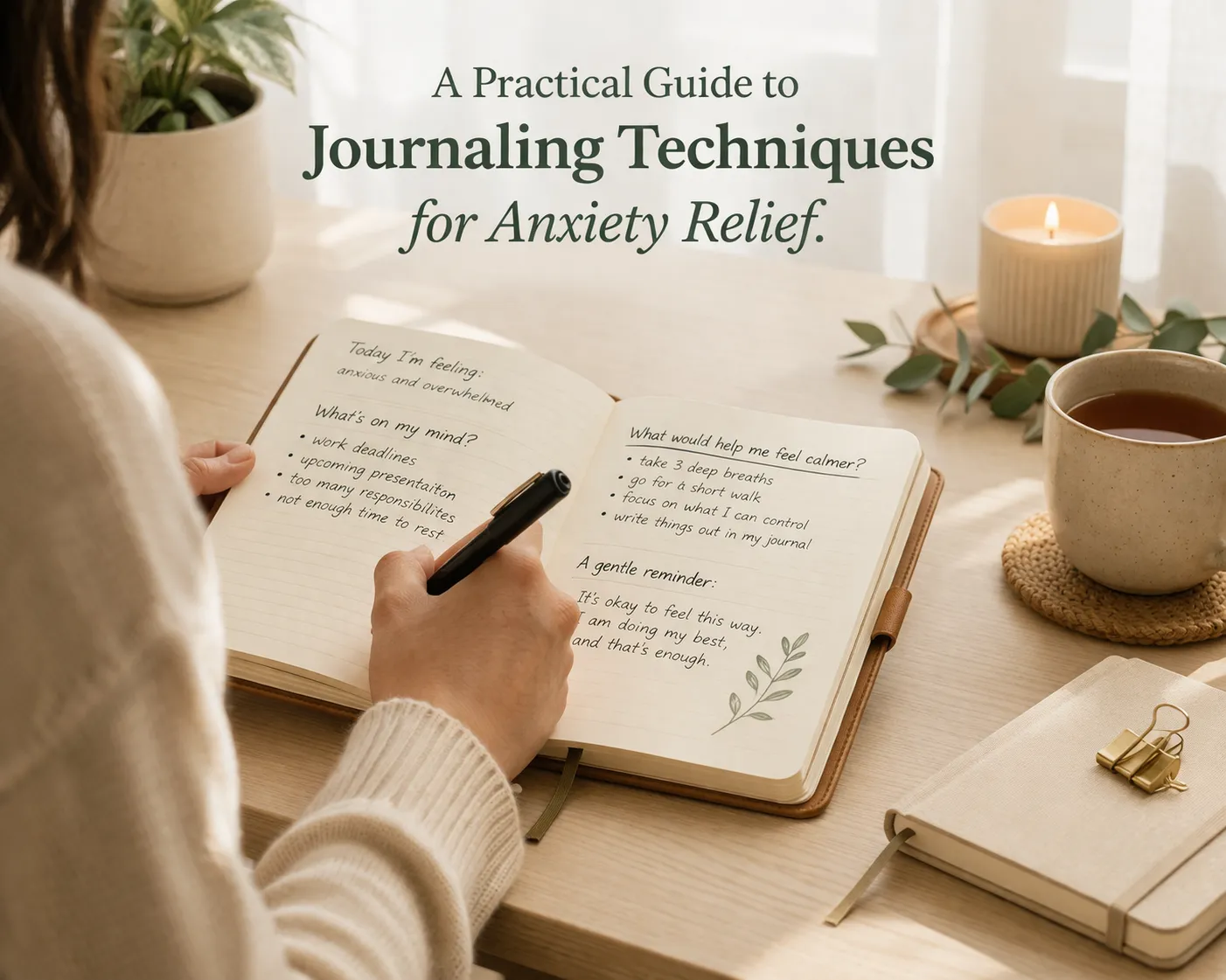
    A person writing at a calm desk — five bounded exercises with realistic evidence and safety limits for anxiety.
    7 min læsning

    Dagbogsskrivning ved angst: en praktisk guide

    Fem afgrænsede skriveøvelser ved angst med tydelige grænser for mekanismer, dosis, behandlingspåstande og hvornår du bør stoppe.

    Læs mere
    OwnJournal open source announcement — the complete codebase is now publicly available on GitHub under the AGPL-3.0 license.
    3 min læsning

    OwnJournal er nu open source

    OwnJournal er nu fuldt open source. Den komplette kodebase er offentligt tilgængelig på GitHub under AGPL-3.0-licensen.

    Læs mere
    A clean desk with an open journal and a cup of coffee, inviting a calm first journaling session.
    14 min læsning

    Dagbog for begyndere: guide til at komme i gang

    Dagbog for begyndere forklaret med forskning. Lær hvad dagbogsskrivning er, hvad evidensen viser, og hvordan du starter en praksis der holder.

    Læs mere

    A softly lit bedside table with an open journal and a warm reading lamp, evoking a calm nighttime writing routine.
    7 min læsning

    Hjælper det at skrive dagbog før sengetid?

    Et lille søvnlaboratoriestudie fandt en fordel efter en kort huskeliste, men evidensen for en generel aftenrutine er begrænset.

    Læs mere
    An open journal with a pen beside it, a soft light illuminating the blank page, representing the moment before writing begins.
    6 min læsning

    Hvad skal du skrive i din dagbog? Fire udgangspunkter

    Fire praktiske udgangspunkter med klare grænser for, hvad studier af planlægning, kort skrivning, taknemmelighed og selvdistancering faktisk viser.

    Læs mere

    A journal notebook on one side and a therapy couch on the other, connected by a bridge, representing the relationship between journaling and professional therapy.
    8 min læsning

    Kan dagbogsskrivning erstatte terapi? Det siger forskningen

    Nej. En dagbog kan støtte refleksion og indgå i visse behandlinger, men erstatter ikke vurdering, behandlingsplan, relation eller krisehjælp.

    Læs mere
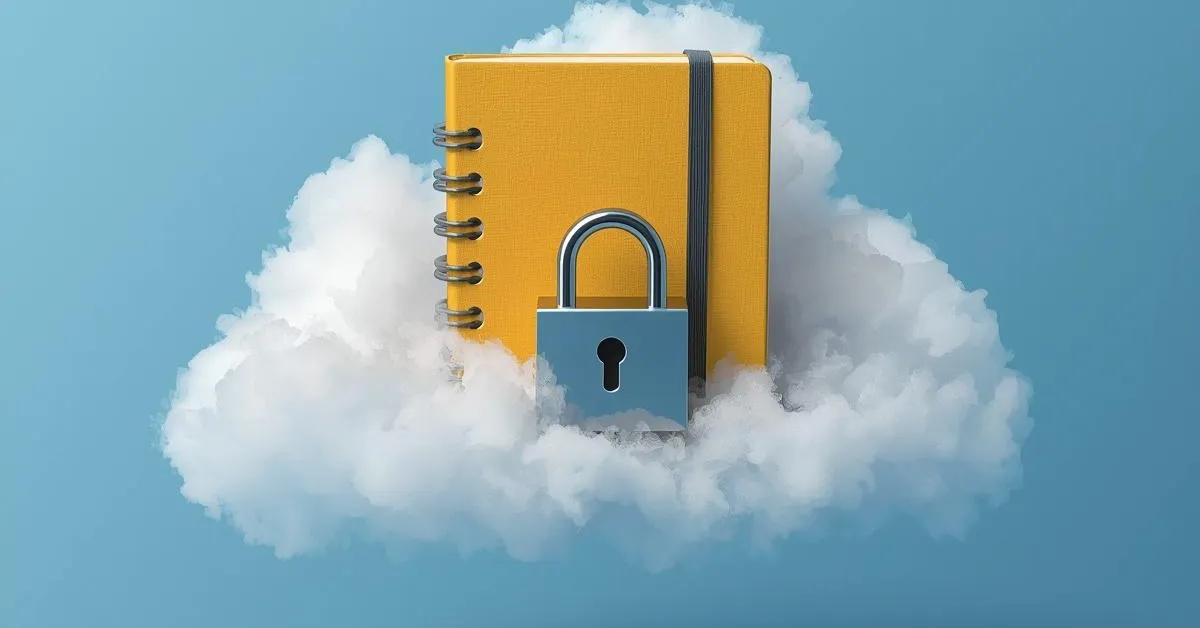
    A journal notebook icon floating inside a cloud with a lock symbol, representing the question of whether cloud storage is safe for private journal entries.
    8 min læsning

    Er det sikkert at gemme din dagbog i skyen?

    Sikkerheden afhænger af din trusselsmodel, tjenestens arkitektur, nøglekontrol, endepunkter, gendannelse, backups, eksporter og risikoen for tab.

    Læs mere
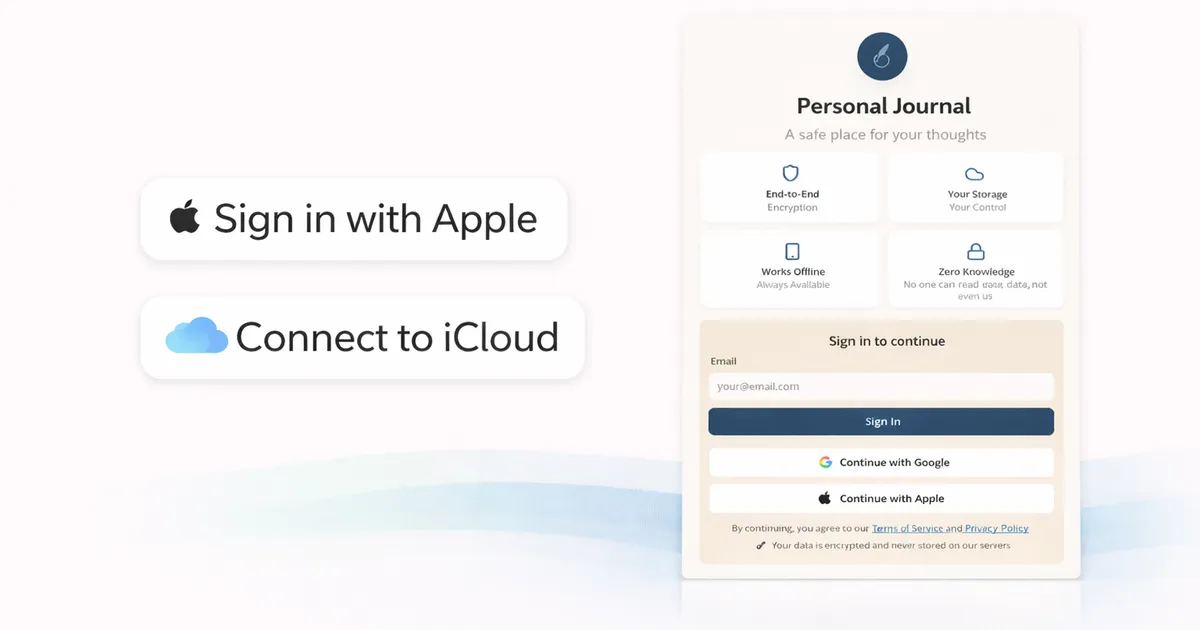
    Sign in with Apple and Connect to iCloud buttons shown next to the OwnJournal sign-in screen with its privacy features.
    3 min læsning

    OwnJournal understøtter nu Apple-login og iCloud-lagring

    OwnJournal understøtter nu login med Apple og iCloud som lagringsmulighed for din dagbog. Begge funktioner er tilgængelige i webappen.

    Læs mere
    An open notebook beside a stack of research papers, representing the question of whether journaling actually works and what scientific evidence supports it.
    5 min læsning

    Hjælper det at skrive dagbog?

    Ingen pålidelig individuel prognose, fælles hjernemekanisme eller metode, der virker for alle, er fastslået.

    Læs mere

    A digital journal app on a smartphone screen with a padlock overlay, representing the question of who can access your private journal entries and the importance of end-to-end encryption.
    8 min læsning

    Hvem kan læse din digitale dagbog?

    Adgangen til en digital dagbog afhænger af enheder, lagring, nøgler, gendannelse, deling, sikkerhedskopier, metadata og tjenestens arkitektur.

    Læs mere

    How to start a journaling habit — a simple notebook and pen on a clean desk beside a cup of coffee, representing the low-barrier start of a daily writing routine.
    5 min læsning

    Sådan opbygger du en dagbogsvane, der faktisk holder

    Der findes hverken en særlig tidsfrist for dagbogsskrivning eller pålidelig generel statistik, som viser, at de fleste begyndere stopper inden for to uger.

    Læs mere
    Can journaling make you think more clearly? A hand holding a clear glass sphere that refracts and sharpens a blurred landscape — symbolizing how writing can bring thoughts into focus and offer a new perspective.
    7 min læsning

    Kan dagbogsskrivning gøre tankerne klarere?

    Intet direkte forsøg viser, at en almindelig dagbog forbedrer tænkning generelt. Forskning i konkrete planer og struktureret refleksion giver mere afgrænsede fingerpeg.

    Læs mere
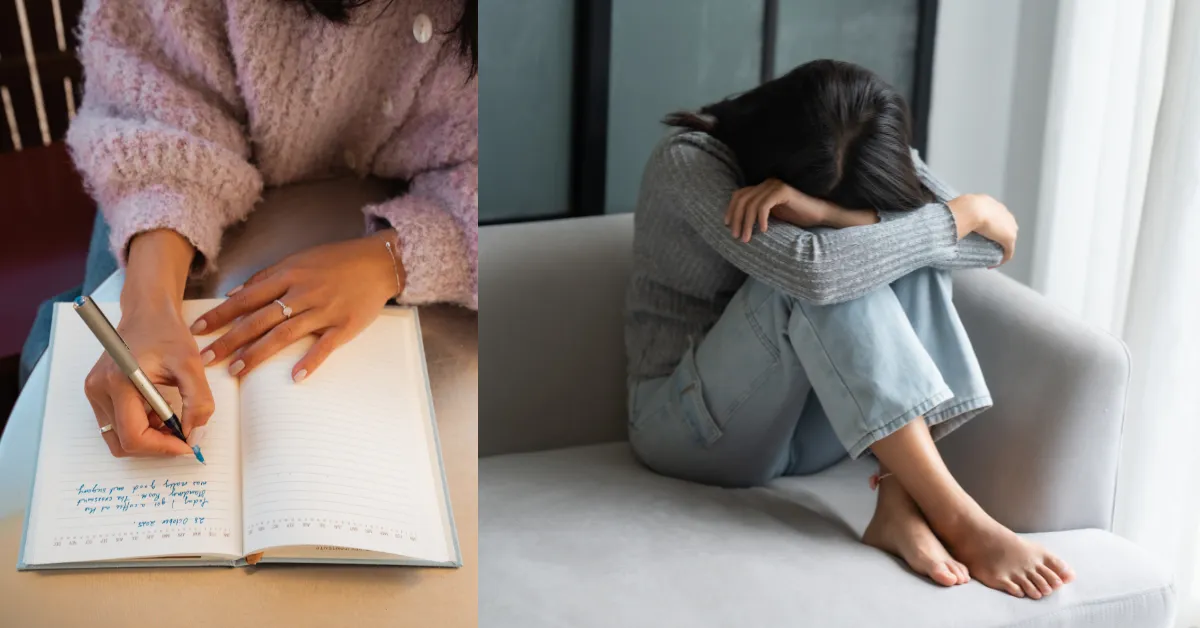
    Does journaling help with anxiety? A person writing in a journal in a calm setting — exploring the science of journaling for anxiety relief.
    6 min læsning

    Hjælper dagbogsskrivning mod angst?

    Nogle strukturerede skriveøvelser har vist små gennemsnitlige gevinster, men almindelig bekymringsskrivning er ikke en dokumenteret behandling og kan blive til grubleri.

    Læs mere
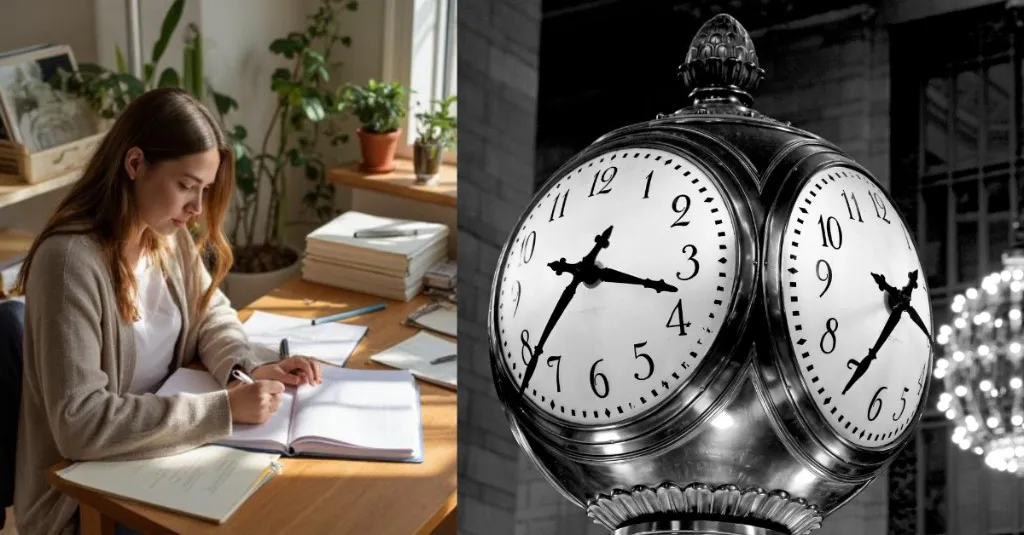
    Can journaling slow down time? Woman writing in a journal at a desk contrasted with an ornate clock—journaling and the perception of time.
    8 min læsning

    Kan dagbogsskrivning få tiden til at gå langsommere?

    Ingen undersøgelse viser, at en dagbog bremser den subjektive tid. Forskning i hukommelse og hændelsesgrænser giver kun en indirekte, uprøvet hypotese.

    Læs mere

    OwnJournal app logo with text 'OwnJournal is now available on Google Play' and the official 'Get it on Google Play' badge, announcing the app's launch on Android.
    1 min læsning

    OwnJournal er nu tilgængelig på Google Play

    Du kan nu installere OwnJournal fra Play Store. Din private dagbog, i din sky, på din Android-enhed.

    Læs mere
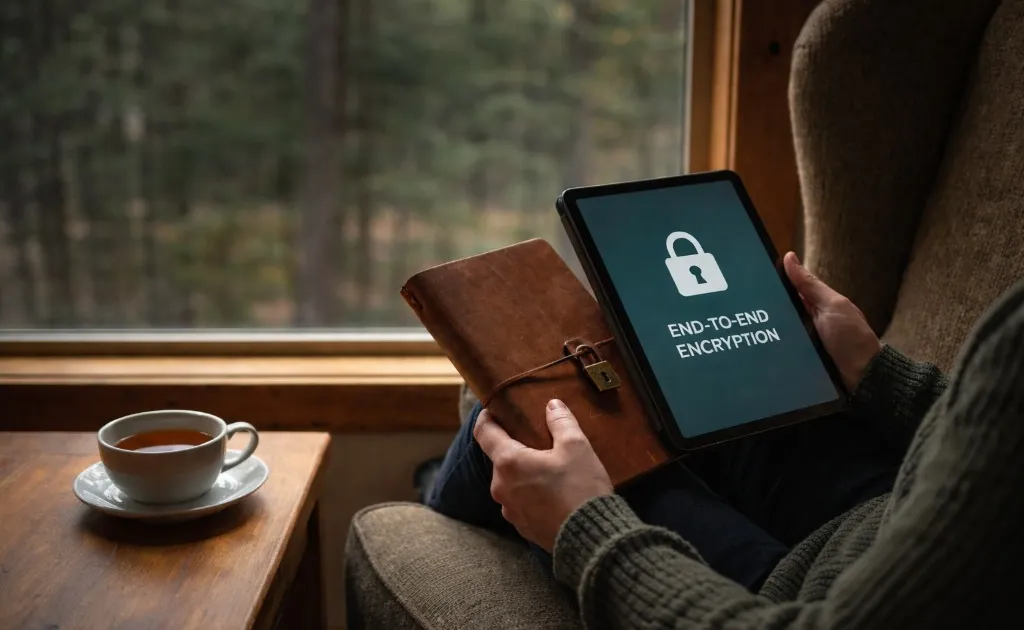
    A locked journal resting on a desk, symbolizing the importance of privacy and end-to-end encryption for personal writing.
    6 min læsning

    Hvorfor privatliv betyder noget, når du skriver dagbog

    Oplevet privatliv kan påvirke, hvad mennesker fortæller. Se forskningens grænser og hvordan kryptering, opbevaring og adgang hænger sammen.

    Læs mere
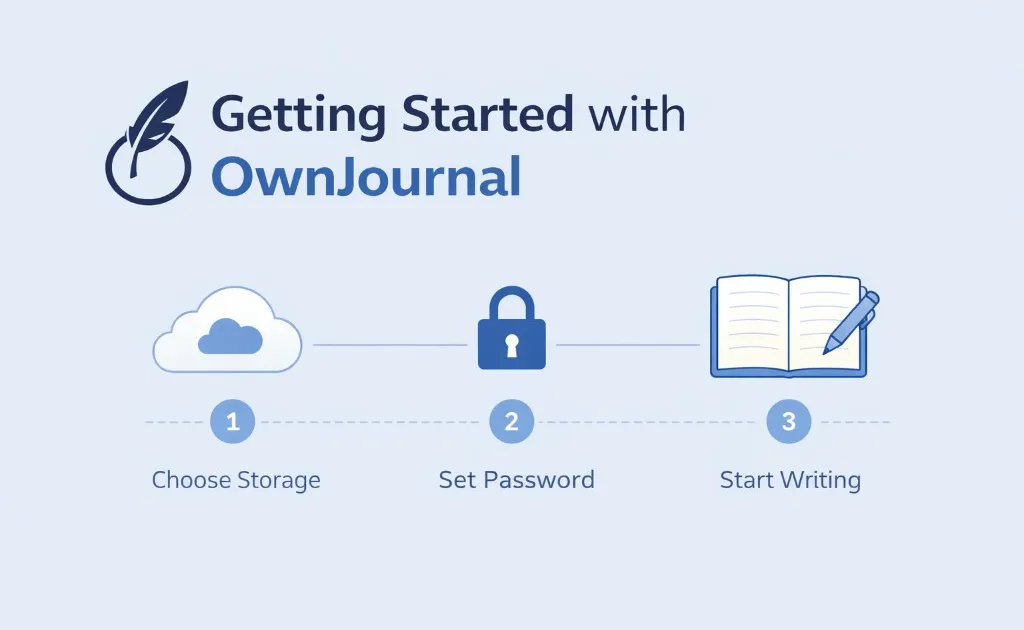
    Getting Started with OwnJournal — 3 steps: Choose Storage, Set Password, Start Writing
    2 min læsning

    Kom godt i gang med OwnJournal

    En hurtig guide til at sætte din private dagbog op på under 5 minutter. Vælg lagring, angiv adgangskode og begynd at skrive.

    Læs mere
    Person writing in a journal in a calm, well-lit setting — journaling for self-reflection and mental wellness.
    7 min læsning

    Dagbog og psykisk trivsel: Det viser forskningen

    Dagbogsskrivning kan støtte nogle mennesker en smule. Se, hvad studierne testede, hvad der er usikkert, og hvordan du starter nænsomt.

    Læs mere